Italian SLEs: 10 Pilots Shaping the Future of Open Schooling
Italy played a leading role in the STE(A)M Learning Ecologies (SLEs) project, piloting 10 innovative projects that connect schools, research institutions, local communities, and civil society in co-created learning journeys.
Coordinated nationally by APRE (Agenzia per la Promozione della Ricerca Europea), the Italian pilots showcase how open schooling can inspire inclusive, interdisciplinary, and impactful education.
A nationwide experiment in open schooling
The pilots involved schools of every level – from kindergartens to upper secondary – across six regions: Lazio, Campania, Sardinia, Piemonte, Lombardia, and Toscana.
Over 1,000 students took part in projects covering key societal challenges: environment, health, cultural heritage, food, gender equality, and active citizenship.
The initiatives were supported by a rich network of stakeholders: national research centres (CNR, CREA, INAIL, ISPRA), universities, natural parks, museums, local associations, and families. Together, they created dynamic “learning ecologies” where education meets real-life challenges.
The 10 Italian pilots
- Nature and Art – naturalistic drawing as a tool for science communication and inclusion.
- Us and the Waters – water monitoring, ecology and raising awareness about human impact.
- Food Waste reduction and Sustainable Behaviour– laboratories on food, nutrition, active citizenship and biotechnologies.
- Geo-Archeo – combining geoscience and archaeology to valorize landscapes and tackle gender equality.
- Everything Has Its Own Story – theatre, creativity, and circular economy for the youngest learners.
- Build Your Einstein Telescope (BYE) – physics and science education through embodied learning.
- Green Transition and Gender – hands-on labs linking sustainability, STEM, and gender issues.
- Blue Mission: Our sea is our health – short films and labs on marine ecosystems and the One Health approach.
- Garden Care: a space to grow and thrive – school gardens, biodiversity, and outdoor civic education.
Tangible results
The pilots generated a wide range of concrete outputs, including:
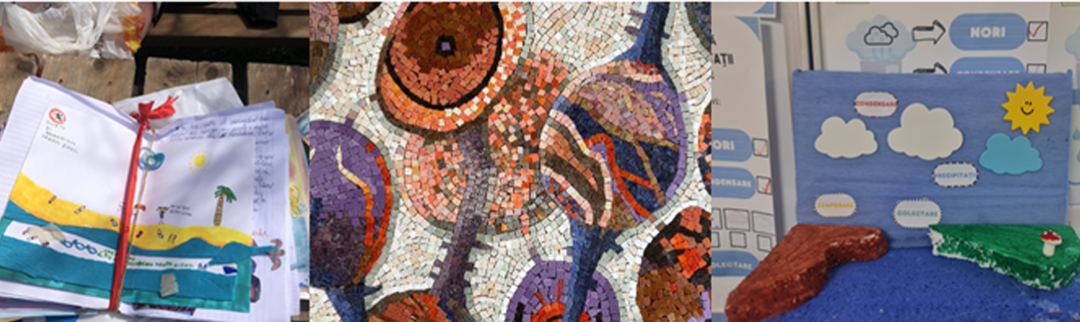
- botanical drawings and scientific posters
- digital booklets and anti-waste recipes
- theatre performances and creative maps
- short films and photo diaries
These products show how creativity, science, and civic action can come together to produce lasting learning outcomes.
Good practices & lessons learned
From the Italian pilots, several transferable practices stand out:
- Co-design from the start: involving multiple actors in early planning strengthens ownership and impact.
- Living labs as learning spaces: enabling experimentation, peer learning, and real-world engagement.
- Start from real challenges: whether food waste, biodiversity, or gender stereotypes, authentic issues motivate students and connect learning with life.
- Creative documentation: drawings, videos, theatre, and maps serve not only as evaluation tools, but also as vehicles for memory and dissemination.
- Inclusion and gender balance: essential for ensuring equal opportunities and broad participation in STE(A)M.
Towards a new learning culture
The Italian portfolio shows how schools can open their doors to society, creating educational experiences that go beyond the classroom. By involving communities, researchers, and families, young people are empowered as active citizens and future scientists.
These 10 pilots are not just isolated experiments – they represent scalable models that can inspire similar initiatives across Europe, pointing the way toward a more inclusive, creative, and sustainable future of education.
Check out, deepen and get in touch with the Italian pilot projects through SLEs National Portfolio